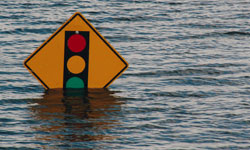
Floods are the most common natural disaster on Earth, and by some estimates the single deadliest event in modern history happened in the water.
The most common catastrophe
Floods top every disaster-frequency chart. They arrive as overflowing rivers, coastal storm surge, flash floods in dry canyons, and the failure of the dams and levees built to stop them. The 1931 Yangtze and Huai River floods inundated an area the size of England, with death-toll estimates ranging from several hundred thousand into the millions.
What makes water so lethal is how little of it you need. Six inches of moving water can knock an adult off their feet; two feet can carry away a car.
“Turn around, don't drown.”
Flash floods and the failure of warning
Riverine floods build over days and can be forecast. Flash floods cannot. A thunderstorm miles upstream can send a wall of water through a dry wash with almost no notice — which is why so many flood deaths are people caught in their vehicles.
Dams and levees create a second danger: a false sense of safety. Infrastructure ages, and the worst floods often follow a structure's failure rather than the rain itself.
Atmospheric rivers
The Willamette and its tributaries have a long history of flooding; the 1996 floods caused widespread damage across the valley. Atmospheric rivers — long plumes of Pacific moisture — are the region's signature flood driver.
Coastal and tsunami flooding are covered separately, but for inland Portland the realistic threats are urban flash flooding and river rise during a sustained atmospheric river.
Preparing for rising water
Know whether you live in a floodplain — FEMA flood maps are free — and whether your insurance covers flood damage, because standard homeowner policies do not. Move valuables and utilities above expected flood levels, and never drive into water of unknown depth.
When evacuation is ordered, minutes matter. The households with a go-bag and a route already chosen are the ones who leave calmly instead of becoming the rescue.